iGaming | 1 November 2026
You’ve got a hundred bucks and an evening free. The casino floor glows, the sportsbook app pings with a line move, and a poker table has an empty seat. Three doors, same building. But walk through the wrong one and your hundred disappears in twenty minutes—not because the games are rigged, but because you brought the wrong mindset. The iGaming world loves to lump slots, poker, and betting under one roof. Players who treat them as interchangeable are the ones funding the industry’s profit margins. Here’s how each game actually works, and how to pick the one that fits your brain.
Slots: The Math Is Brutal and Beautiful
A modern video slot is a random number generator spinning 800 times a second. Every spin is independent. The machine doesn’t “heat up” or “go cold.” That 5-reel, 243-ways Monopoly slot with the progressive jackpot? Its return-to-player (RTP) is likely between 94% and 96.5% on the base game. That sounds decent until you realize the house edge compounds over thousands of spins. Further details are available through kết quả bóng đá.
Here’s a concrete example. You play a slot with a 96% RTP and a “high volatility” rating—meaning most spins return nothing, but rare spins pay huge. You buy in for $100, betting $1 per spin. The math says you’ll lose about $4 per 100 spins on average. But variance means you might hit $500 on spin 47, or you might be down to $20 by spin 80. Slots are pure entertainment product. There’s no skill lever to pull.
- Volatility matters more than RTP for your session length. Low volatility slots (like Starburst, 96.1% RTP) pay small amounts often. High volatility (like Book of Dead, 96.2% RTP) can eat a $200 bankroll in ten minutes.
- Jackpot slots have terrible base-game RTP. Mega Moolah’s base game RTP is around 88.1%. The rest feeds the millionaire maker. If you’re not chasing the jackpot, you’re paying for someone else’s dream.
- Autoplay is a trap. It removes the tiny friction that lets you notice you’ve lost $80 in four minutes. Use it sparingly.
The honest truth: slots are the highest-margin product in any casino for a reason. They require zero decisions. If you enjoy the lights and sound, set a hard loss limit before you press spin. If you’re trying to “grind” a bonus, check the wagering contribution—slots usually count 100%, but that’s because they’re the casino’s favorite.
Poker: The Only Game Where You Can Have a Real Edge
Poker is not gambling in the same sense as slots. It’s a skill game with a gambling element. Over a single session, luck dominates. Over 100,000 hands, skill wins. That’s why professional poker players exist and professional slot players don’t.
Consider a $1/$2 no-limit hold’em cash game. A solid player wins 5 to 10 big blinds per hour—that’s $10 to $20—by exploiting opponents’ mistakes. The edge comes from folding weak hands, value betting thinly, and recognizing when a tight player suddenly shoves. You’re not playing against the house. You’re playing against other humans, and the house takes a rake (typically 10% up to $5 per pot).
Three concrete poker edges you can practice tonight
- Position, position, position. On the button, you can profitably play 30% of hands. Under the gun, that drops to 12%. Most amateurs play the same range from every seat.
- Stop limping. Limping (calling the big blind preflop) is a leak. Raise or fold. Limping invites multi-way pots where your strong hands get cracked.
- Track your results. Use a free app or a notebook. If you don’t know your win rate over 10,000 hands, you’re guessing. A winning player at micro-stakes might make $2 per 100 hands. That’s fine—it’s a learning curve.
The catch: poker has a steep learning curve. You will lose for months before you win. But if you’re competitive and patient, it’s the only iGaming vertical where the house isn’t mathematically guaranteed to beat you long-term. The rake is the house’s cut, but a good player can overcome it.
Sports Betting: Information Versus the Closing Line
Sports betting feels like you’re outsmarting the bookmaker. Most of the time, you’re not. The book’s opening line is set by a trading team that has forgotten more about injury reports than you’ll ever know. By the time you bet, the line has moved to incorporate the sharp money. That final number—the closing line—is the market’s best guess at the true probability.
Example: An NFL game opens with the Chiefs -3.5. Sharp bettors hammer the underdog, and the line closes at Chiefs -2.5. If you bet the Chiefs early at -3.5, you got a bad number. If you bet the underdog at +3.5, you got a good number. The closing line is your benchmark. Beating it consistently is the only way to prove you have an edge.
- Withhold your bets until you understand closing line value (CLV). If you consistently bet teams at +3 when they close at +2, you’re likely a long-term winner—even if you lose that specific game.
- Props and parlays are sucker bets for most. A 3-leg parlay at +600 has an implied probability of 14.3%. If your true probability is 18%, that’s value. But most bettors overestimate their picks by 5–10%.
- Line shopping is free money. Two books might offer -110 and -105 on the same side. Over 100 bets, that 5-cent difference is $50 on a $100 average bet. Use an odds comparison tool.
The sportsbook’s margin (vig) is typically 4–5% per bet. That’s better than slots (4–8% per spin) but worse than poker if you’re skilled. The key difference: sports betting rewards research and discipline, but the variance is brutal. A 55% win rate against the spread is excellent—and you’ll still lose 45% of your bets.
Which One Should You Actually Play?
Ask yourself why you’re playing. If you want pure distraction with zero brainpower, slots are fine—set a timer and a loss limit. If you want a mental challenge and a chance to actually win long-term, learn poker or become a sharp sports bettor. But don’t mix them up.
I’ve seen slot players sit at a poker table and call every hand because they’re used to pressing a button. I’ve seen sports bettors chase losses on a high-volatility slot because they’re tilted from a bad beat. Each vertical demands a different psychological approach.
- Slots: Treat as paid entertainment. Budget $20–$50 per session. Never chase.
- Poker: Treat as a skill-building hobby. Study for every hour you play. Track results over 50,000 hands.
- Sports betting: Treat as an investment. Bet only when you have a strong reason. Line shop every time.
The Bottom Line
The iGaming industry wants you to think slots, poker, and betting are the same thrill packaged differently. They’re not. Slots are a random number generator with a built-in tax. Poker is a chess match with cards where you can actually win if you outwork your opponents. Sports betting is a probability market where the closing line is your only honest teacher. Pick the game that matches your temperament, not the one with the flashiest ad. Your bankroll—and your sanity—will thank you.





























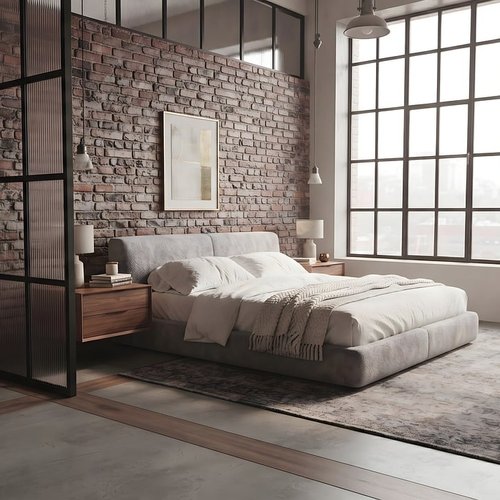
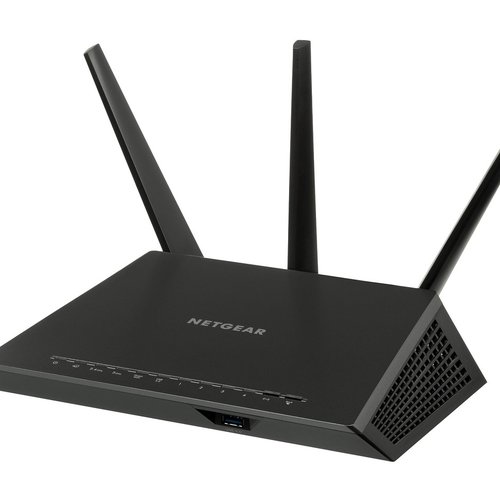
Loft walls are beautiful but unforgiving when it comes to hiding wires, so here is how to route your network and power cables without ruining the industrial look.
Alice Rose
Sep 7, 2026 at 3:12 pm